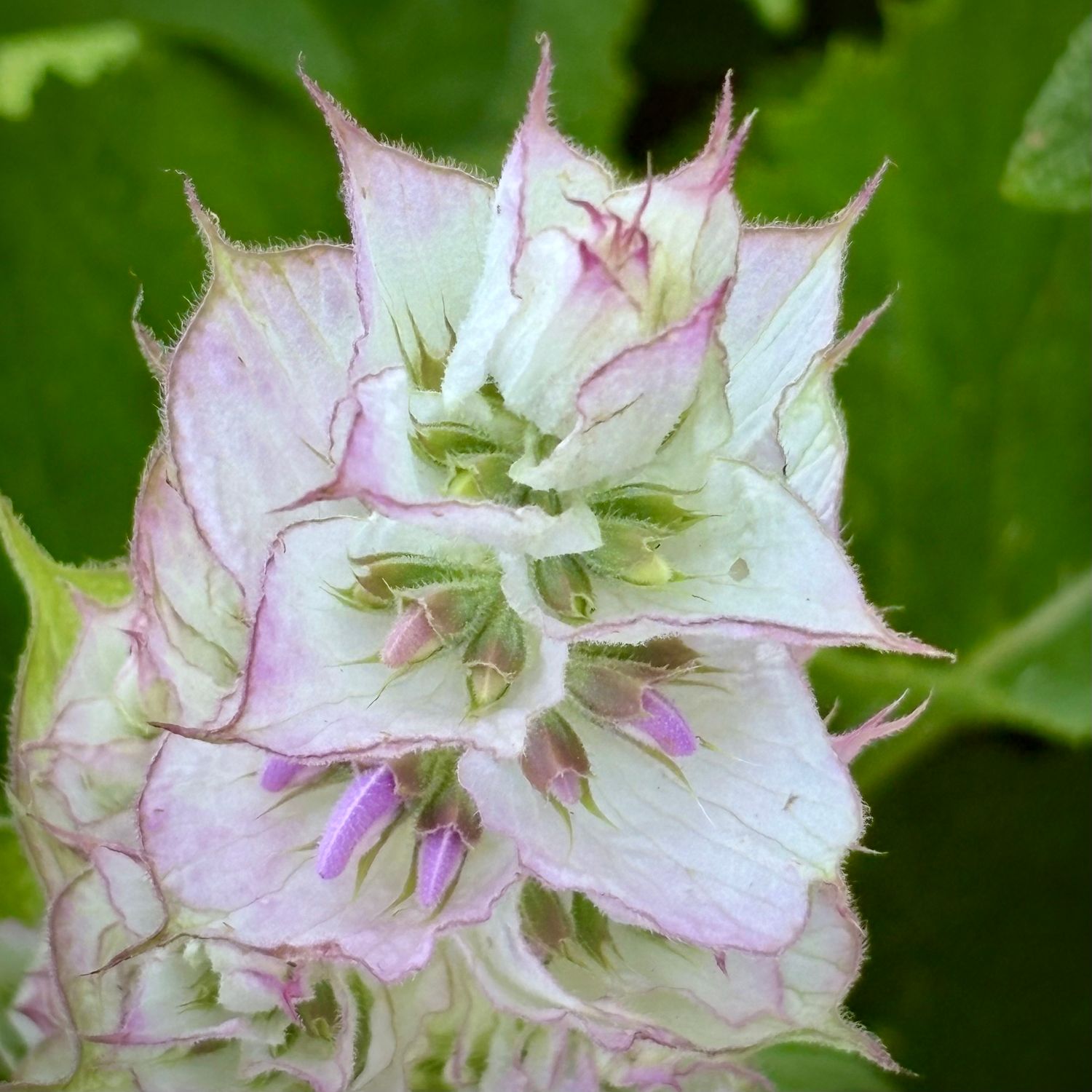
Clary Sage
$4.50
Pollinator
Ancient Clarity for the Modern Food Forest
In stock
Product Details
Clary Sage is one of the most versatile and commanding plants you can invite into a self-regulating food forest. A biennial or short-lived perennial, it rises in its second year into a towering, architectural presence—sending up dramatic spires of soft lavender, white, and pink blooms that billow like a fog bank rolling in from the coast. It is bold, beautiful, and deeply useful, earning its place in any ecological system that values both form and function.
Revered for centuries in European herbalism and perfumery, Clary Sage carries a rich heritage that runs as deep as its roots—a plant that has sustained communities, healed bodies, and scented the wild edges of civilizations long before modern agriculture simplified everything. Its essential oil is among the most prized in natural medicine and aromatherapy, celebrated for its calming, clarifying properties. In the garden, it is equally generous—attracting native bees, bumblebees, and beneficial insects with its abundant nectar while self-seeding freely to ensure its own continuation. Once established, it asks very little and gives back enormously.
USDA Hardiness Zones: 5–9. A hardy biennial that thrives in dry, sunny climates and handles cold winters with ease.
Perennial Potential: Clary Sage is a biennial or short-lived perennial that blooms prolifically in its second year. It self-seeds freely, naturalizing over time into a long-lived, self-sustaining colony that returns year after year without replanting.
Sun Exposure: Full sun. Clary Sage thrives in bright, direct sunlight and performs best in open, unshaded positions. It tolerates light afternoon shade in the hottest climates but may produce fewer blooms as a result.
Soil Requirements: Well-draining, lean, and slightly alkaline to neutral soil with a pH of 6.0–8.0. Like most sages, it prefers poor soils over rich, amended ones. Avoid heavy clay or waterlogged conditions, which can cause root rot. Excellent for rocky, high-desert soils where other plants struggle.
Planting Time: Direct sow in early spring after the last frost, or in fall for germination the following spring. Seeds germinate best with warm soil temperatures of 60–70°F. In the high desert, a fall sowing mimics natural self-seeding cycles and produces the most vigorous plants.
Planting Depth & Spacing: Sow seeds 1/8 inch deep, pressing lightly into the soil surface. Space plants 18–24 inches apart to allow for their substantial second-year growth. Clary Sage can reach 3–4 feet in height and spread, so give it room to assert itself.
Watering: Extremely drought tolerant once established. Water regularly during germination and the first growing season to encourage strong root development. In the second year, deep, infrequent watering is sufficient. Overwatering is the most common mistake—err on the side of dry.
Temperature Sensitivity: Highly tolerant of heat and cold extremes, making it ideally suited to the dramatic temperature swings of the Eastern Sierra. Established plants handle hard frosts with ease. Young seedlings may need light protection from late spring frosts in the first season.
Offering: 50 seeds